Listening to Communities: Lessons from Sighisoara-Tarnava Mare, Romania
What can we learn when we ask local communities about their experiences of conservation?
Some questions about a protected area can’t be answered by ecological monitoring, however good it is. Species and habitat monitoring can tell us what is happening to biodiversity, but not how the people who live and work around a protected area experience it, whether they feel connected to the place, or whether they feel they benefit from its protection.
To understand that side of conservation, you have to ask — and that is what a team of researchers set out to do at Sighișoara–Târnava Mare in Romania as part of the ERC funded project FIDELIO. What they found is a good illustration of why listening to communities belongs alongside ecological evidence, rather than after it.
Full report is available here.
The place
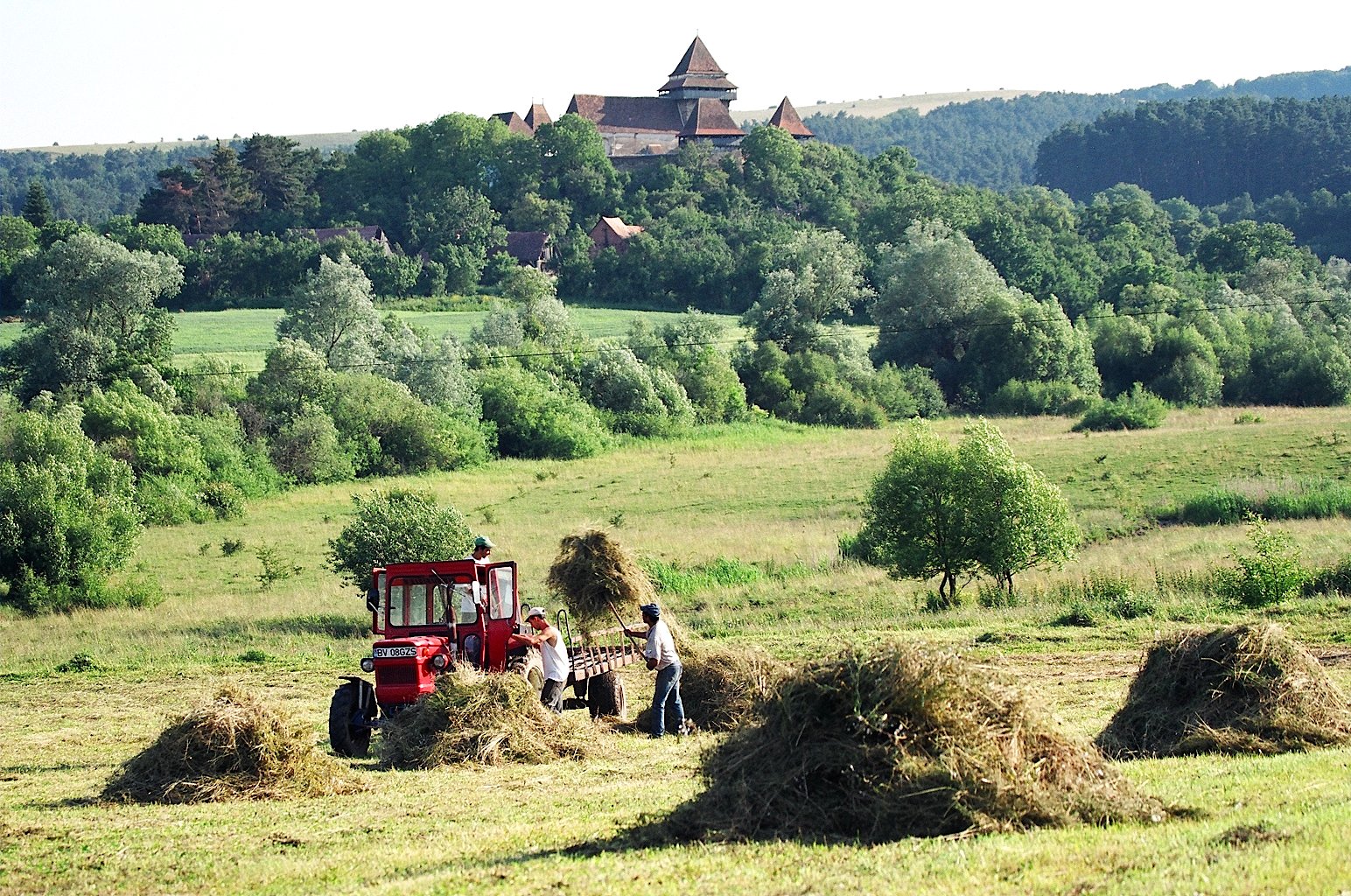
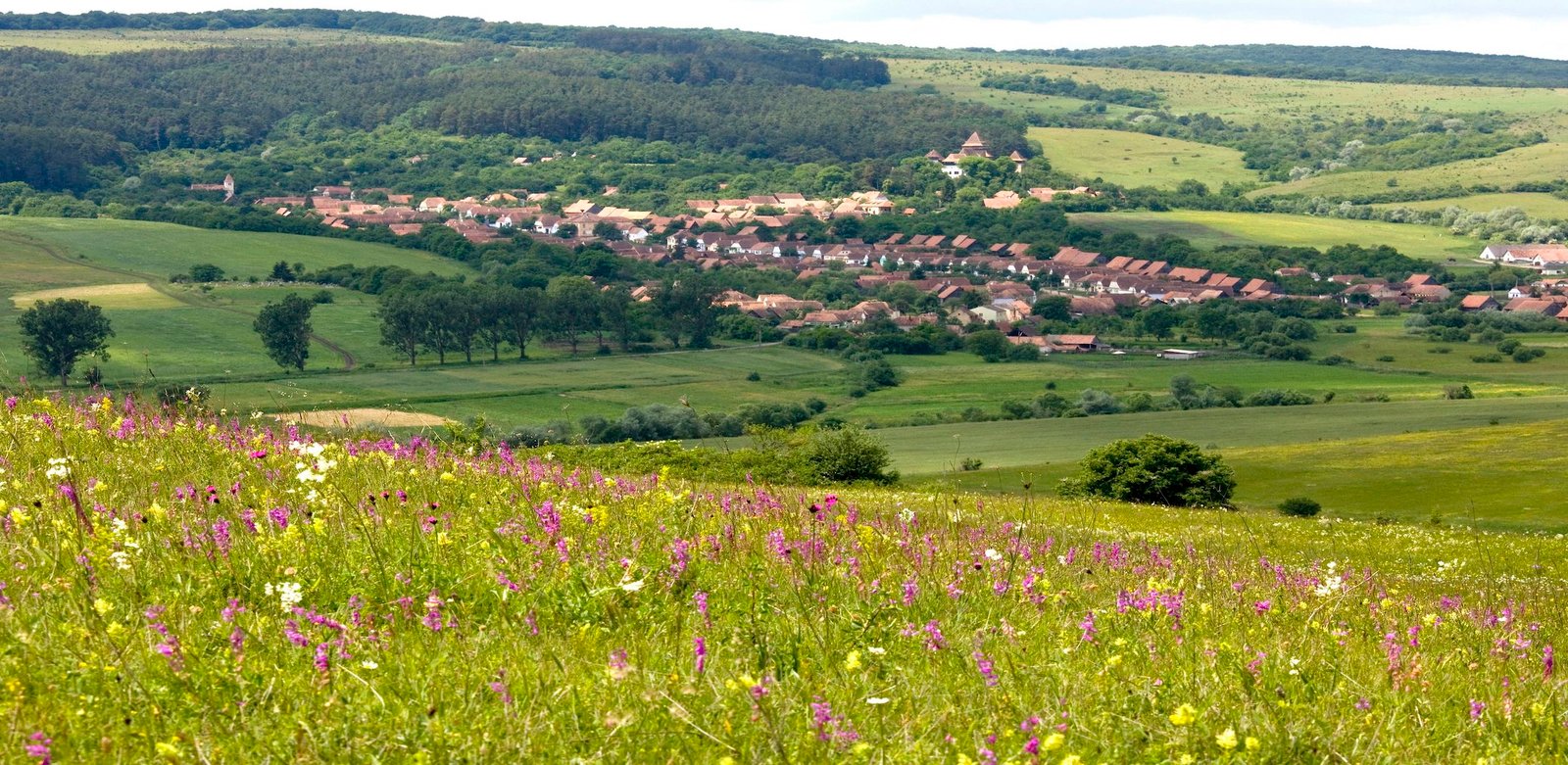
Sighișoara–Târnava Mare is a Natura 2000 protected area covering around 893 km² in Romania’s Centru region. It is one of the country’s largest designated conservation areas.
The landscape is remarkably diverse. It contains wetlands, rivers, semi-natural grasslands and forests and supports 36 species of European conservation importance, including brown bear, wolf, otter, beaver and several bat species. Seventeen habitat types of community interest are also protected.
But this is also a living landscape. Traditional patterns of land use have helped shape the mosaic of habitats found there, while agriculture, tourism, housing and local livelihoods continue alongside conservation. That makes it exactly the kind of place where social outcomes matter and can easily be overlooked.
How they listened
The researchers used SOCIAT — the Social Impact Assessment Tool for Protected Areas — to collect the views of local communities.
A structured questionnaire explored a range of social outcomes and people’s wider views about the protected area. It was distributed face-to-face with support from the local NGO Fundatia ADEPT, which had experience of working with communities in the area.
Around 200 local residents took part, the great majority of whom were permanent residents.
The important point was simple: rather than assuming what conservation meant for local people, the researchers asked them directly.
What they found
The headline results were strongly positive.
More than 90% of participants supported the existence of the Sighișoara–Târnava Mare Natura 2000 protected area, while around 70% said that the area meant a lot to them, indicating strong attachment to place.
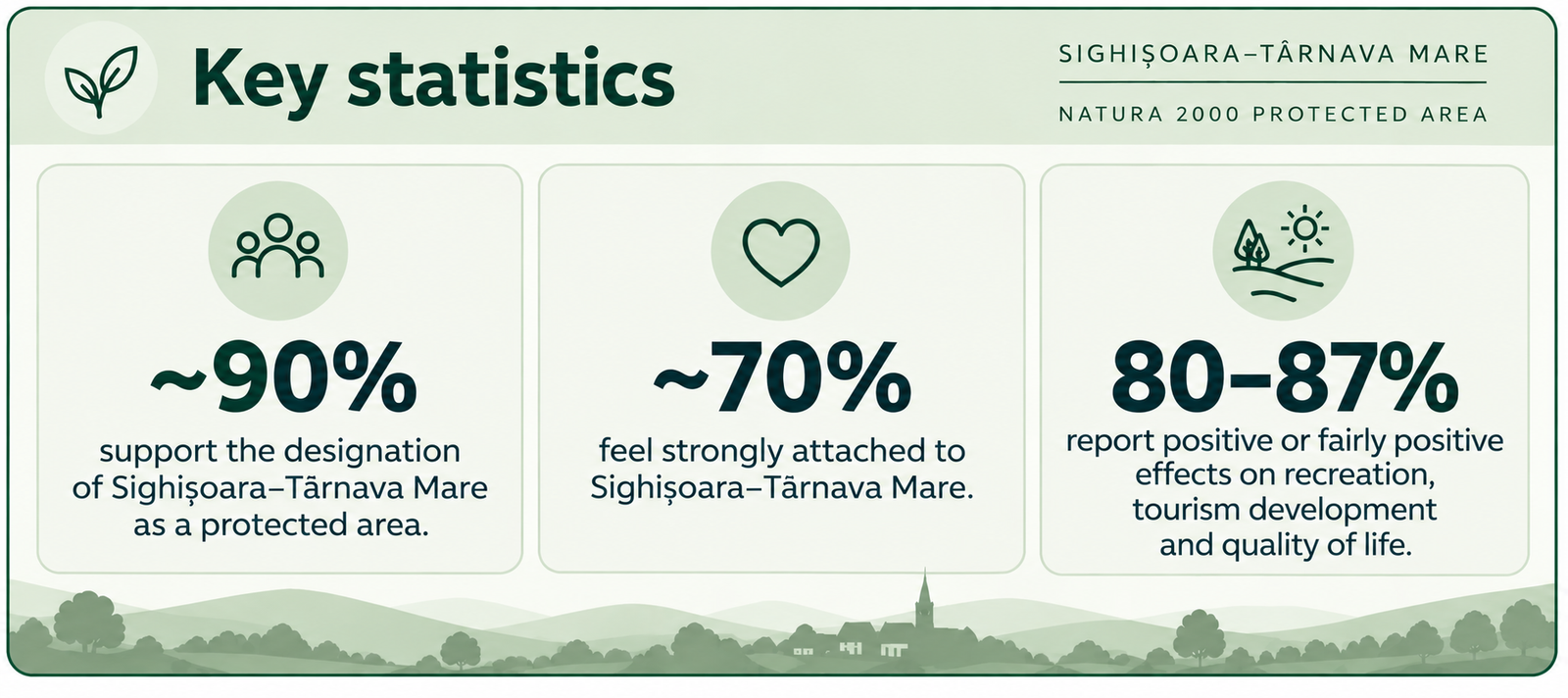
The study explored a range of social outcomes. Recreation, tourism development and quality of life stood out, with around half of respondents reporting that the protected area had a positive or fairly positive influence on these aspects of their lives.
Personal income was also viewed positively or fairly positively by more than half of the sample. By contrast, the strongest negative perceptions related to the development of intensive agriculture.
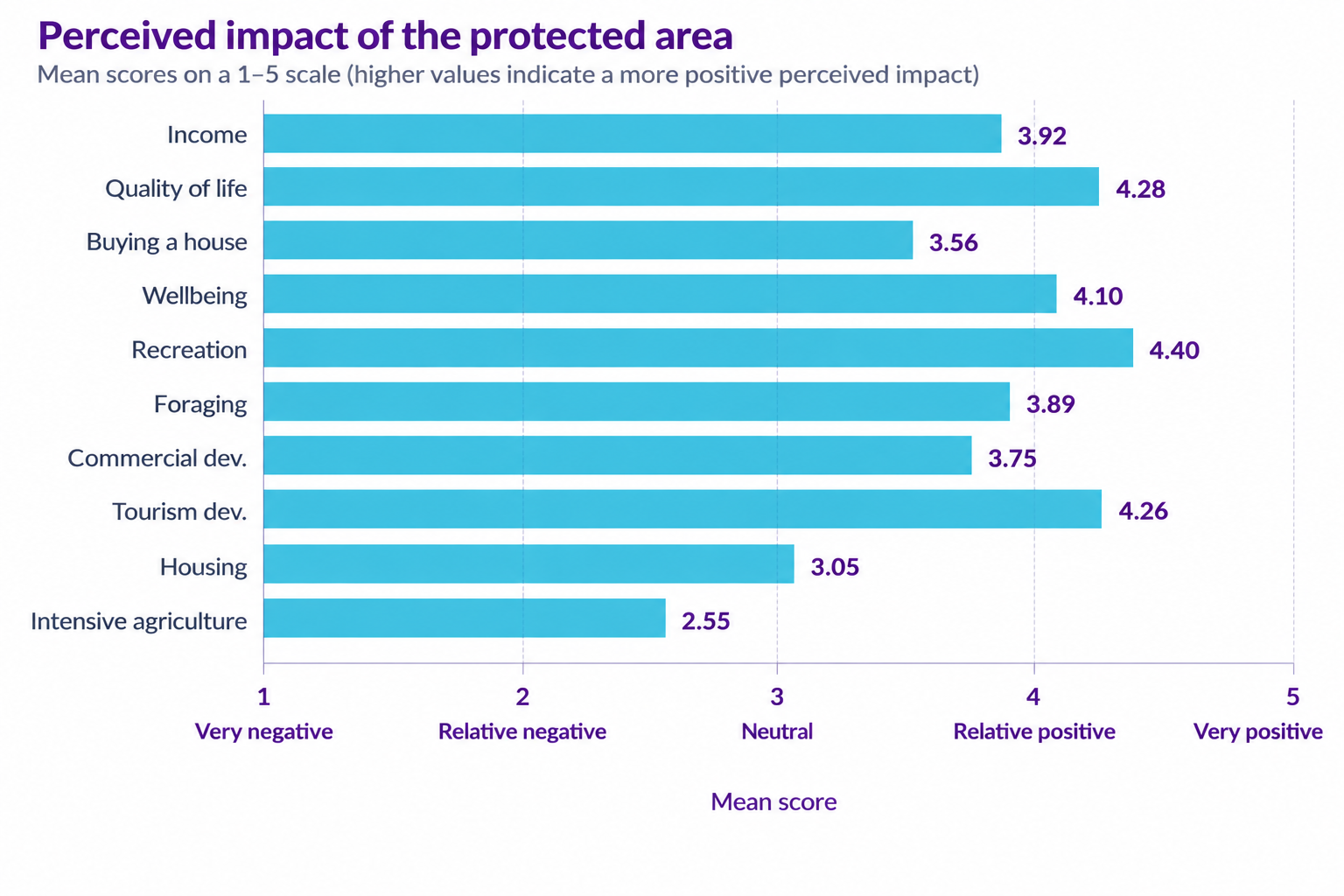
That contrast is worth pausing on, because it shows why assessing social outcomes means looking beyond a simple question of whether a protected area is “good” or “bad” for local communities.
The same protected area can be associated with benefits for recreation, tourism, quality of life and income while also being perceived as restricting particular forms of economic activity. Both can be true at the same time.
Why there was no single “community view”
Maybe the clearest lesson from Sighișoara–Târnava Mare is that “the community” is never one voice.
The research found differences between local communities in how people perceived some of the protected area’s impacts, particularly those relating to recreation, income and quality of life.
That is easy to miss if we rely only on averages. People living within the same protected landscape may experience conservation differently depending on where they live, how they use the land and what they depend upon it for.
If researchers had looked only at the overall level of support for the protected area, these differences could have remained hidden. Looking at how experiences vary between communities gives a much more useful picture.
What this means for practice
Ask communities directly; don’t infer their experience from secondary data or assume good ecological outcomes mean good social ones.
Look at different kinds of outcome — quality of life, recreation, livelihoods and other benefits and costs can tell different stories.
Look beyond overall averages to understand whether different communities experience conservation differently.
Distinguish support from benefit — supporting a protected area does not mean every outcome is experienced positively.
Treat negative outcomes as findings to understand, rather than evidence that conservation itself is unsupported.
What other protected areas can learn
Sighișoara–Târnava Mare is one protected landscape in Romania, and the specifics will differ everywhere, but the approach travels.
Any protected area can ask what it means to the people who live there, measure the outcomes that matter to them, and look at whether those outcomes are experienced differently across communities.
The broader lesson runs through this whole series: ecological evidence and social evidence answer different questions, and conservation decisions are better when both are on the table.
Sighișoara–Târnava Mare shows what the social side can reveal once we take the time to ask.
Lessons for other protected areas
Support for conservation and its social impacts are not the same thing — measure both.
Positive overall results can hide important differences between communities.
Social and ecological evidence belong together in the same decision.
The first article in this series set out the wider social outcomes conservation can produce.
Sighișoara–Târnava Mare shows what it looks like to investigate them in a real place. The next article looks at the social-science methods behind this kind of work, and how they can be built into the monitoring and evaluation that protected areas already do.
Assessing social outcomes systematically, across sites and communities, is what the SOCIAT approach is designed to support.